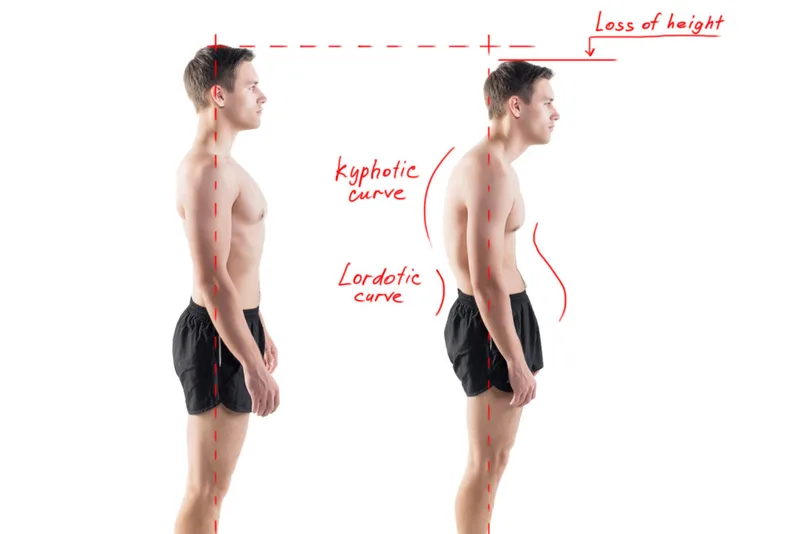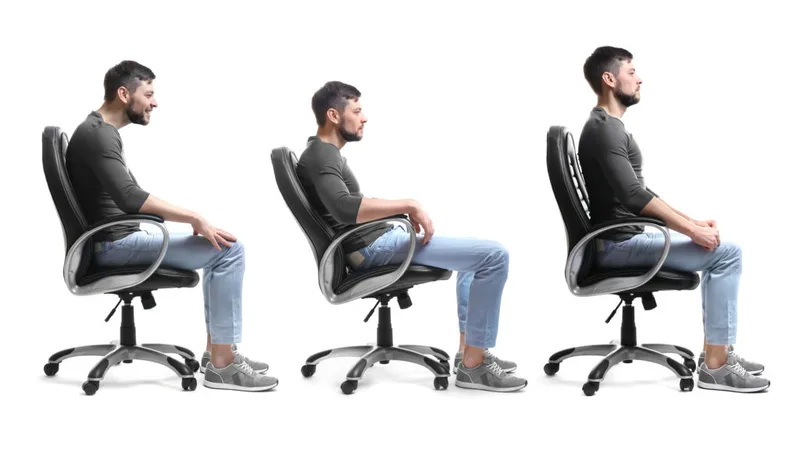
If your neck or back feels uncomfortable at the end of the workday, start by looking at the tasks you repeat and how your workspace fits you. The goal is a setup and movement routine that you can use comfortably throughout the day.
Pain can have several contributing factors. A photograph of how you sit is only one piece of the picture; your symptoms, health history, activity, and examination also matter.
1. Make the workspace fit the task
Keep frequently used items close enough that you can reach them comfortably. Adjust your chair so your feet and back have support, and position your screen where you can see it without repeatedly leaning forward or turning your head.
The National Library of Medicine's posture guide recommends relaxed shoulders, back support, and a work surface at a comfortable height. If you work on a laptop, consider whether a separate keyboard would let you place the screen more comfortably.
Change one part of the setup at a time. Then try a normal work task and note what feels easier. Bring those observations to your appointment if discomfort continues.
2. Build movement into the day
Switch sitting positions and take brief walking breaks. A standing desk still needs a routine that lets you move and change tasks; standing in one place for the whole day may not be comfortable either.
Choose reminders that fit your work: refill a water bottle, stand for part of a phone call, or walk between tasks. Notice whether shorter periods in one position are easier to tolerate than one long session.
3. Develop a routine you can progress
General activity, strength work, and comfortable mobility exercises can be part of a posture plan. The right starting point depends on what you can do now and what you want to get back to.
Instead of collecting several online routines, ask your clinician for a small set of exercises with clear instructions. Discuss the starting amount, how to progress, and which symptoms mean the exercise should be changed. At a follow-up, describe what improved and what remains difficult.
When neck or back discomfort needs an evaluation
Arrange an evaluation if symptoms persist, recur, or interfere with your usual activities. Tell your provider about pain spreading into an arm or leg, numbness, weakness, or a recent injury. The NIAMS back-pain overview explains why symptoms and contributing factors need to be considered together.
Posture and movement care in Brookfield
Dr. Grant Radermacher can assess your concerns and discuss a plan that may include appropriate chiropractic care, movement guidance, and rehabilitation. Explore our neck-pain and back-pain services, read about your first visit, or request an appointment at Ascent Chiropractic.